Stay put policy in blocks of flats: what it means for residents
Quick answer
Stay put, also called defend in place, means residents who aren't affected by a fire stay in their flat unless the fire and rescue service tells them to leave, because each flat is built as a fire-resisting compartment. If there's a fire in your flat, or heat or smoke is affecting you, you leave straight away. Most purpose-built blocks of flats use stay put, and it only works if fire doors and the walls and floors between flats are kept in good order.
Most purpose-built blocks of flats in England have a stay put evacuation strategy. If you're the responsible person, you must explain your building's strategy to residents, and the strategy must come from your fire risk assessment. This guide explains what stay put means, why it's used, what keeps it working, and when a building needs a different approach.
What stay put means for residents
- If the fire is in your flat: get everyone out, close the flat entrance door behind you, leave the building and call 999.
- If the fire is somewhere else in the building: you're usually safer staying in your flat with the door closed, unless heat or smoke is affecting you or the fire and rescue service tells you to leave.
- If you're in the common parts when you discover a fire: leave the building and call 999.
- If in doubt, get out. Residents can always choose to leave if they feel unsafe.
Firefighters can decide to evacuate some or all of the building during an incident. Residents should follow their instructions.
Why most purpose-built blocks use stay put
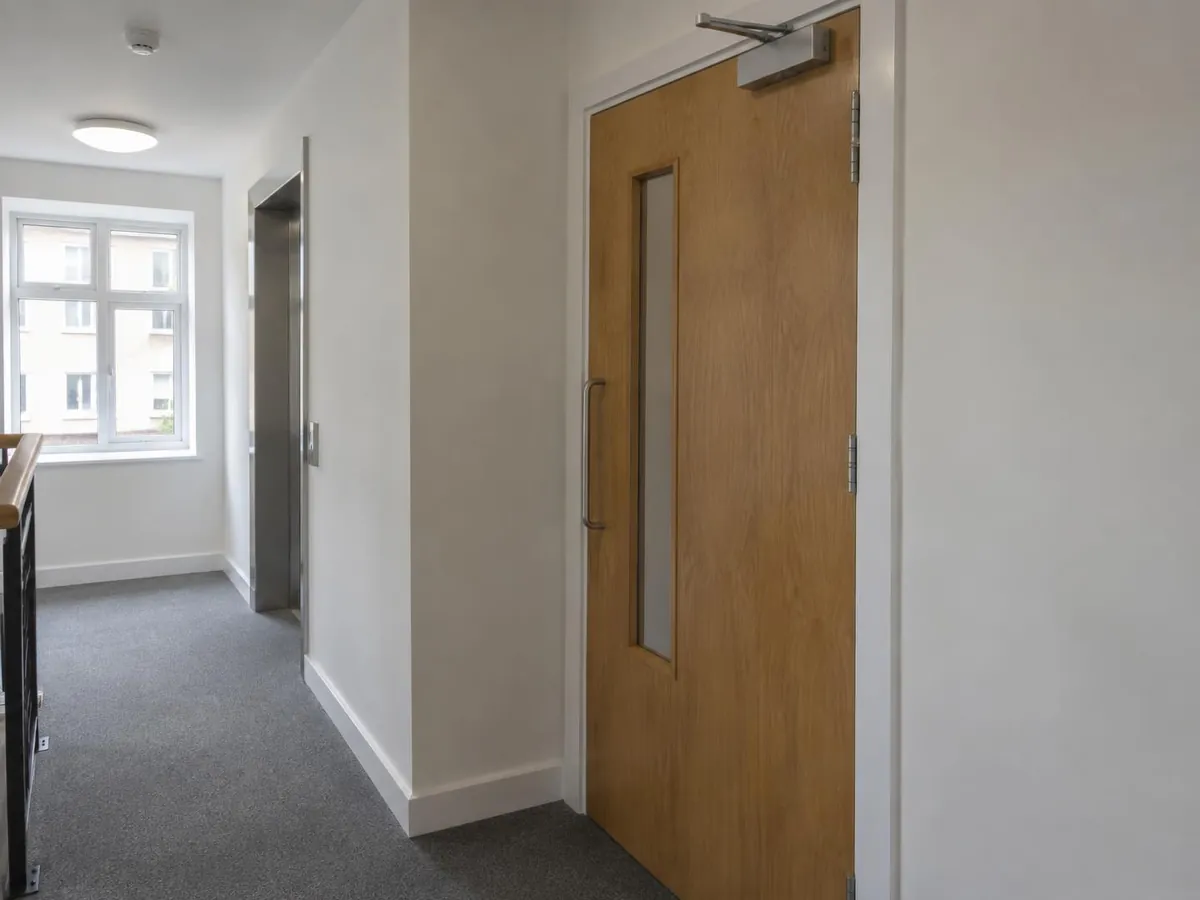
Purpose-built blocks of flats are designed so that each flat is a separate fire-resisting compartment. The walls and floors between flats, and between each flat and the common parts, are built to hold back fire and smoke for a set time. The flat entrance door is part of that protection: it's usually a fire door with a self-closing device, designed to resist fire for 30 minutes.
When that compartmentation works, a fire is usually contained in the flat where it started, and residents elsewhere aren't put at risk by staying where they are. It also keeps the stairs clear for firefighters, rather than filling them with everyone leaving at once.
For the same reason, most stay put buildings don't have a communal fire alarm. An alarm in the common parts could send everyone into the stairs when there's no need. Each flat should have its own smoke alarm. Your fire risk assessment will say what your building needs.
What keeps stay put working
- Fire doors that close fully by themselves, with seals and hinges in good condition, and that aren't propped or wedged open.
- No unsealed holes in the walls and floors between flats and the common parts, for example where cables or pipes pass through.
- External walls that don't spread fire.
- Escape routes kept clear of rubbish, bikes, mobility scooters and other items.
- Residents who know the strategy and what to do.
In blocks over 11 metres, the 3-monthly communal fire door checks and yearly flat entrance door checks under Regulation 10 help you spot problems before they undermine the strategy.
When stay put isn't the right strategy
Your fire risk assessment decides your building's strategy. Stay put may not be suitable where compartmentation can't be relied on, for example:
- some converted houses and older buildings, where simultaneous evacuation is often used instead;
- buildings where serious defects have been found, such as unsafe external walls or widespread compartmentation failures.
Where serious defects are found, a building may move to a temporary simultaneous evacuation strategy until they're fixed. The National Fire Chiefs Council's Simultaneous Evacuation Guidance covers this, usually with a common fire alarm and sometimes a waking watch for a short period. It's intended as an interim measure, not a permanent change.
Don't change your building's strategy without advice from a competent fire risk assessor, and tell residents straight away if it changes.
What residents must be told
Under Regulation 9 of the Fire Safety (England) Regulations 2022, residents must be given fire safety instructions that explain the evacuation strategy, how to report a fire and what to do once a fire has started. The instructions must be displayed in a conspicuous part of the building, given to new residents as soon as reasonably practicable after they move in, given to all residents at least every 12 months, and updated after any material change, such as a switch from stay put to simultaneous evacuation.
Residents who may need help to evacuate should know how to tell you. In buildings of 18 metres or 7 storeys and above, and buildings over 11 metres with a simultaneous evacuation strategy, residential personal emergency evacuation plans also apply. See residential PEEPs for blocks of flats.
How Resident Fire Safety helps
Resident Fire Safety writes your resident leaflet and "In case of fire" notice for your building's actual strategy. For a stay put building, the leaflet and notice explain the policy, with separate steps for a fire in your flat and a fire elsewhere in the building. If your strategy changes, update it and reissue straight away.
£59 per building per year, whatever the number of flats. See pricing
For a summary you can keep, download our free fire safety guide for blocks of flats.
Sources: The Fire Safety (England) Regulations 2022, Regulatory Reform (Fire Safety) Order 2005, NFCC Simultaneous Evacuation Guidance
Common questions
Is stay put still used in blocks of flats?
Yes. Stay put remains the usual strategy for purpose-built blocks of flats in England where compartmentation is sound. Where serious defects are found, a building can move to temporary simultaneous evacuation until they're fixed.
Should I stay put if smoke is coming into my flat?
No. If fire, heat or smoke is affecting your flat, leave, close the door behind you and call 999.
Why is there no fire alarm in the corridors of our block?
In a stay put building, a communal fire alarm could send everyone into the stairs when there's no need. Each flat should have its own smoke alarm. Your fire risk assessment will say what your building needs.
Who decides whether a building is stay put?
The responsible person, based on the building's fire risk assessment. The strategy must then be explained to residents under Regulation 9.