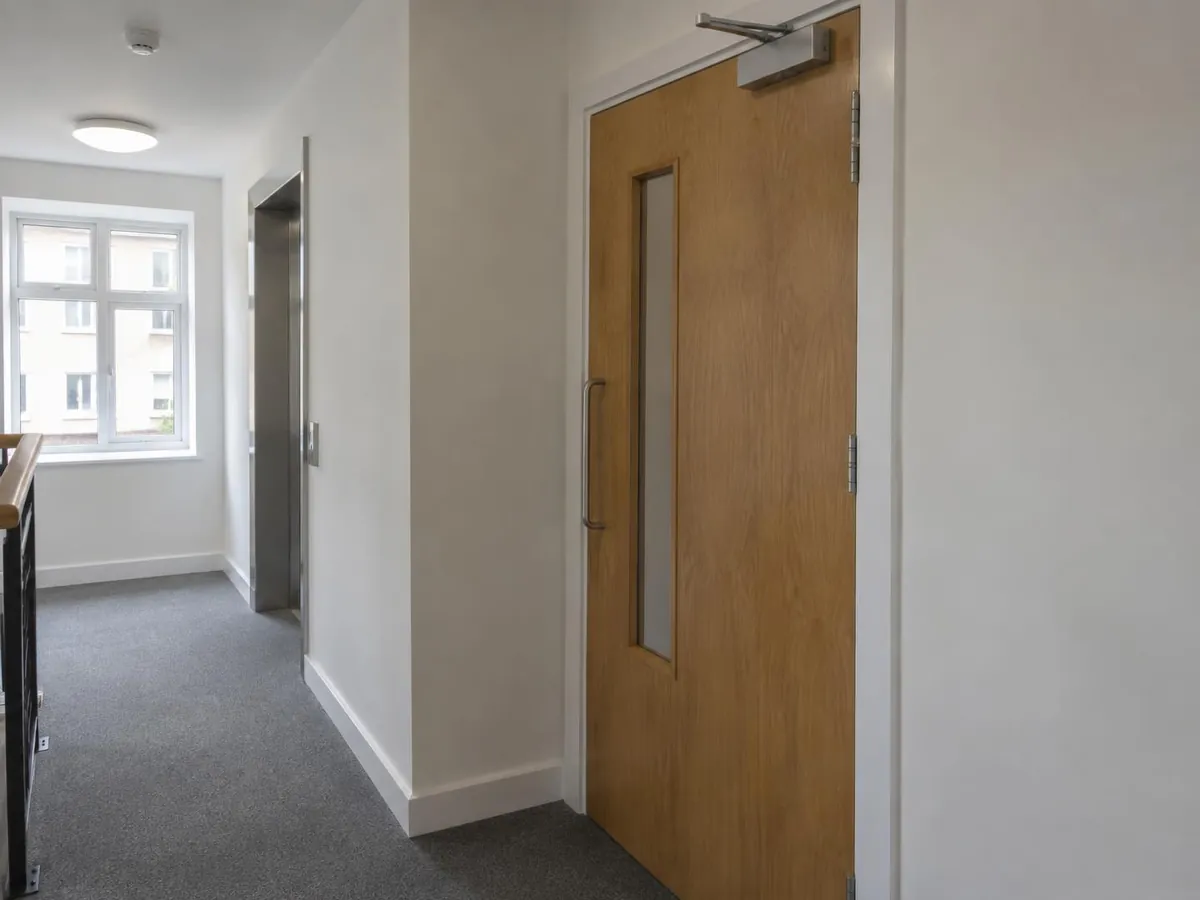
Fire door regulations for blocks of flats in England
Quick answer
In England, the Fire Safety (England) Regulations 2022 set two fire door duties for blocks of flats. In every block with two or more flats and shared escape routes, residents must be told to keep fire doors shut, not to tamper with self-closing devices and to report faults. In blocks with storeys over 11 metres, the responsible person must also check communal fire doors at least every 3 months and use best endeavours to check every flat entrance door at least every 12 months. Both duties have applied since 23 January 2023.
People often search for the "new fire door regulations". For blocks of flats in England, the rules that matter are in regulation 10 of the Fire Safety (England) Regulations 2022, made under the Regulatory Reform (Fire Safety) Order 2005. This guide explains what they require of the responsible person, which is often the freeholder or a residents' management company. It covers existing blocks of flats, not single houses, and it doesn't cover what building regulations require when a block is built or altered.
Which blocks of flats do the rules apply to?
Regulation 10 applies to any building in England that contains two or more sets of domestic premises and has common parts that residents would need to use to evacuate in an emergency. Government guidance says this means all blocks of flats with common parts, whether purpose-built or converted, and that flat entrance doors count as part of the common parts for this purpose.
The door-checking duties apply only where the building has storeys over 11 metres. Height is measured to the top storey.
What must every block tell residents about fire doors?
In every block the rules apply to, whatever its height, the responsible person must give residents information to the effect that:
- fire doors should be kept shut when not in use;
- residents or their guests should not tamper with the self-closing devices; and
- residents should report any faults or damage with doors immediately to the responsible person.
New residents must be given this as soon as reasonably practicable after they move in. All residents must be given it again at least once every 12 months.
See fire safety information for residents for how this sits alongside the fire safety instructions you also have to give.
What door checks are required over 11 metres?
Where the building has storeys over 11 metres, the responsible person must:
- check all fire doors in the communal areas, including their self-closing devices, at least every 3 months; and
- use best endeavours to check every flat entrance door that leads onto the common parts, including its self-closing device, at least every 12 months.
Communal fire doors include doors to stairways and stairway lobbies, and cross-corridor doors that divide up corridors.
The government's fact sheet describes the minimum as an inspection of the doors to identify any obvious damage or issues. Its fire door guidance sets out simple checks a responsible person can carry out.
"Best endeavours" matters because you need the resident to let you in. Regulation 10 requires a record of the steps taken to check flat entrance doors, including where access was not given.
What about blocks under 11 metres?
Regulation 10 sets no checking interval for blocks without storeys over 11 metres. The duty to give residents the fire door information still applies. So do your general duties under the Fire Safety Order, so fire doors should still be covered by the building's fire risk assessment.
Is there a new fire door regulation from 2020 or 2023?
There is no separate 2020 regulation. The Fire Safety Act 2021 confirmed that the Fire Safety Order covers flat entrance doors in blocks of flats. The Fire Safety (England) Regulations 2022 then added the specific duties described here, and they came into force on 23 January 2023.
How many fire doors does a block of flats need?
Regulation 10 doesn't set a number. It is about telling residents how to treat fire doors and checking the fire doors a building already has. Which doors need to be fire doors is a matter for the building's fire risk assessment and, for new work, building regulations.
What to record
Regulation 10 requires a record of the steps taken to check flat entrance doors. We suggest also recording:
- when each resident was given the fire door information, and how;
- the date of each communal fire door check and what was found;
- each attempt to check a flat entrance door where the resident didn't give access; and
- faults reported by residents, and when they were put right.
How Resident Fire Safety helps
Resident Fire Safety writes your resident leaflet and "In case of fire" notice for your building's evacuation strategy, tracks when they're due for reissue, and keeps a flat-by-flat record of who received them.
For a record of the door checks themselves, see our sister site Fire Door Check Log.
£59 per building per year, whatever the number of flats. See pricing
For a summary you can keep, download our free fire safety guide for blocks of flats.
Sources: The Fire Safety (England) Regulations 2022, regulation 10, Fact sheet: Fire doors (regulation 10), Fire Safety (England) Regulations 2022: fire door guidance. Last checked 19 November 2026.
Common questions
Do fire door regulations apply to small blocks of flats?
Yes, in part. Any block in England with two or more flats and shared escape routes must give residents the fire door information. The 3-monthly and yearly door checks apply only where the building has storeys over 11 metres.
How often must communal fire doors be checked?
At least every 3 months, in blocks of flats in England with storeys over 11 metres.
How often must flat entrance doors be checked?
In blocks with storeys over 11 metres, the responsible person must use best endeavours to check them at least every 12 months, and keep a record of the steps taken, including where access was not given.
Should fire doors be kept closed?
Yes. Residents must be told that fire doors should be kept shut when not in use, and that self-closing devices should not be tampered with.
Do these rules apply in Wales, Scotland or Northern Ireland?
No. The Fire Safety (England) Regulations 2022 apply in England only.